
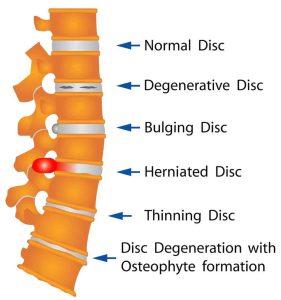
Is a disc bulge the cause of my pain?
Being told you have a disc bulge can be frightening. Many people assume it means their spine is “damaged” or that surgery is inevitable. Fortunately, that is not always the case.
At Centre of Health Ivanhoe Physiotherapy & Acupuncture, we frequently see people who have been diagnosed with a disc bulge on MRI. While disc bulges can certainly be responsible for back pain or sciatica in some cases, modern research suggests the picture is often much more complex.
Our approach is to assess you, not just your scan. By understanding how your body moves and identifying dysfunction throughout the kinetic chain, we can develop an individualised treatment plan to reduce pain, restore movement, and improve long-term function.
Disc Bulges Are Surprisingly Common
One of the most influential studies examining MRI findings was published by Brinjikji and colleagues in 2015. The researchers analysed imaging from more than 3,000 people who had no back pain whatsoever.
The findings were remarkable.
Even though these individuals had no symptoms:
- Around 30% of 20-year-olds already had a disc bulge.
- By 50 years of age, approximately 60% had a disc bulge.
- By 80 years of age, the figure had increased to over 80%.
The study also found that other age-related spinal changes, such as disc degeneration, became increasingly common despite people reporting no pain.
These findings remind us of an important principle:
An MRI tells us what structures are present—it doesn’t necessarily tell us what is causing your pain.
This doesn’t mean disc bulges are unimportant. In some people, a disc bulge may irritate or compress a nearby nerve, contributing to symptoms such as:
- Lower back pain
- Sciatica
- Pins and needles
- Numbness
- Muscle weakness
However, in many others, the disc bulge is simply one piece of a much larger puzzle.
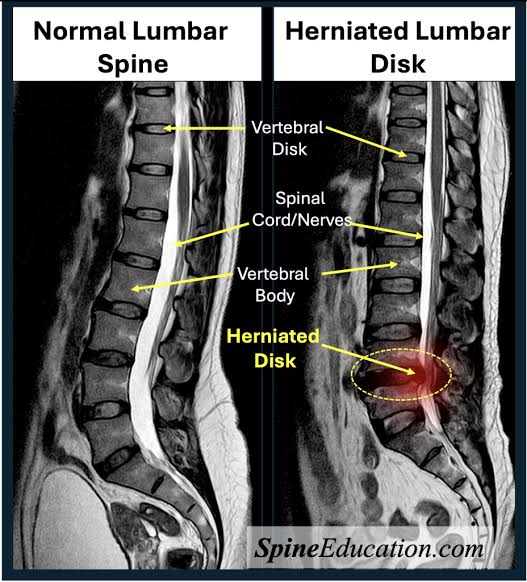
Pain Is About More Than the MRI
Pain is influenced by multiple factors, including the sensitivity of nerves, inflammation, muscle guarding, movement patterns, previous injuries, physical conditioning, sleep, stress and overall health.
Following a disc injury, the body often develops protective movement strategies. Some muscles become tight and overactive while others become inhibited. Joints may stiffen, walking patterns can change, and nearby tissues begin compensating for the injured area.
These adaptations are helpful initially, but if they persist, they can continue contributing to pain and reduced function even after the disc itself has begun settling.
This is why a detailed physical examination is every bit as important as reviewing your imaging.
Rather than chasing MRI findings alone, we assess:
- How you move
- Which muscles are overworking
- Which muscles have become inhibited
- Joint mobility
- Nerve sensitivity
- Strength, balance and coordination
This allows us to identify where treatment is likely to have the greatest impact.
What Does This Mean for You?
The findings from Brinjikji and colleagues don’t suggest that disc bulges should be ignored. Rather, they remind us that a scan is only one piece of the clinical picture.
For some people, a disc bulge is clearly contributing to their symptoms, particularly if it is irritating a nearby nerve root and causing sciatica, numbness or muscle weakness. In these situations, the disc itself may well be an important source of pain.
However, for many others, the MRI finding is only part of the story. The body often responds to pain by changing the way we move. Muscles tighten to protect the spine, some muscles become inhibited or “switch off,” and joints above and below the affected area may become stiff. Over time, these compensatory movement patterns can place additional stress on other parts of the body and contribute to ongoing discomfort, even as the disc itself begins to heal.
This is why a comprehensive physical assessment is so important. Understanding how you move is often just as valuable as understanding what appears on your MRI.
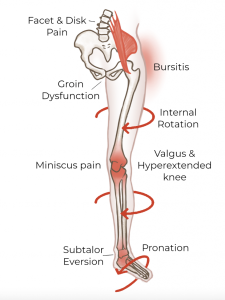
Looking Beyond the Spine
The lower back doesn’t work in isolation. Every step you take, every time you bend, lift, reach or run, forces are transferred through a connected system of muscles, joints and nerves known as the kinetic chain.
A painful disc may initially be the trigger, but reduced hip mobility, weak gluteal muscles, altered abdominal control, tight hamstrings or poor movement strategies can all influence how much load is placed on the lumbar spine.
By identifying these contributing factors, treatment can focus not only on calming symptoms but also on restoring efficient movement patterns. This approach aims to reduce the likelihood of repeated flare-ups and help people return to the activities they enjoy with greater confidence.
Motor Point Acupuncture and Rehabilitation
Alongside physiotherapy, we often use motor point acupuncture to help address muscular dysfunction associated with disc-related back pain.
Motor points are where a motor nerve enters a muscle. By carefully targeting these areas, acupuncture may help reduce excessive muscle guarding, improve activation of inhibited muscles and create a better environment for movement retraining. Rather than simply chasing pain, we use motor point acupuncture to influence the muscles that make up the kinetic chain, helping restore balance and coordination throughout the body.
Current research suggests acupuncture can provide meaningful pain relief for many people with low back pain, particularly when combined with exercise therapy and physiotherapy rather than used in isolation. For this reason, we see acupuncture as one component of a comprehensive rehabilitation program, not a stand-alone solution, but a valuable tool that can help patients move more comfortably while they rebuild strength and confidence.
How Centre of Health Ivanhoe Can Help
At Centre of Health Ivanhoe Physiotherapy & Acupuncture, we combine evidence-based physiotherapy, hands-on treatment, targeted exercise rehabilitation and motor point acupuncture to address both the source of your symptoms and the movement patterns that may be contributing to them.
Whether your back pain is related to a disc bulge, sciatica or another spinal condition, our goal is to help you understand your diagnosis, reduce pain, restore movement and get back to doing the things you enjoy.
If you’ve recently been diagnosed with a disc bulge, or you’ve been living with persistent back pain—our experienced team can provide a thorough assessment and develop an individualised treatment plan tailored to your needs. Remember, your MRI doesn’t define your future. With the right guidance and rehabilitation, many people recover well and return to an active, confident lifestyle.